

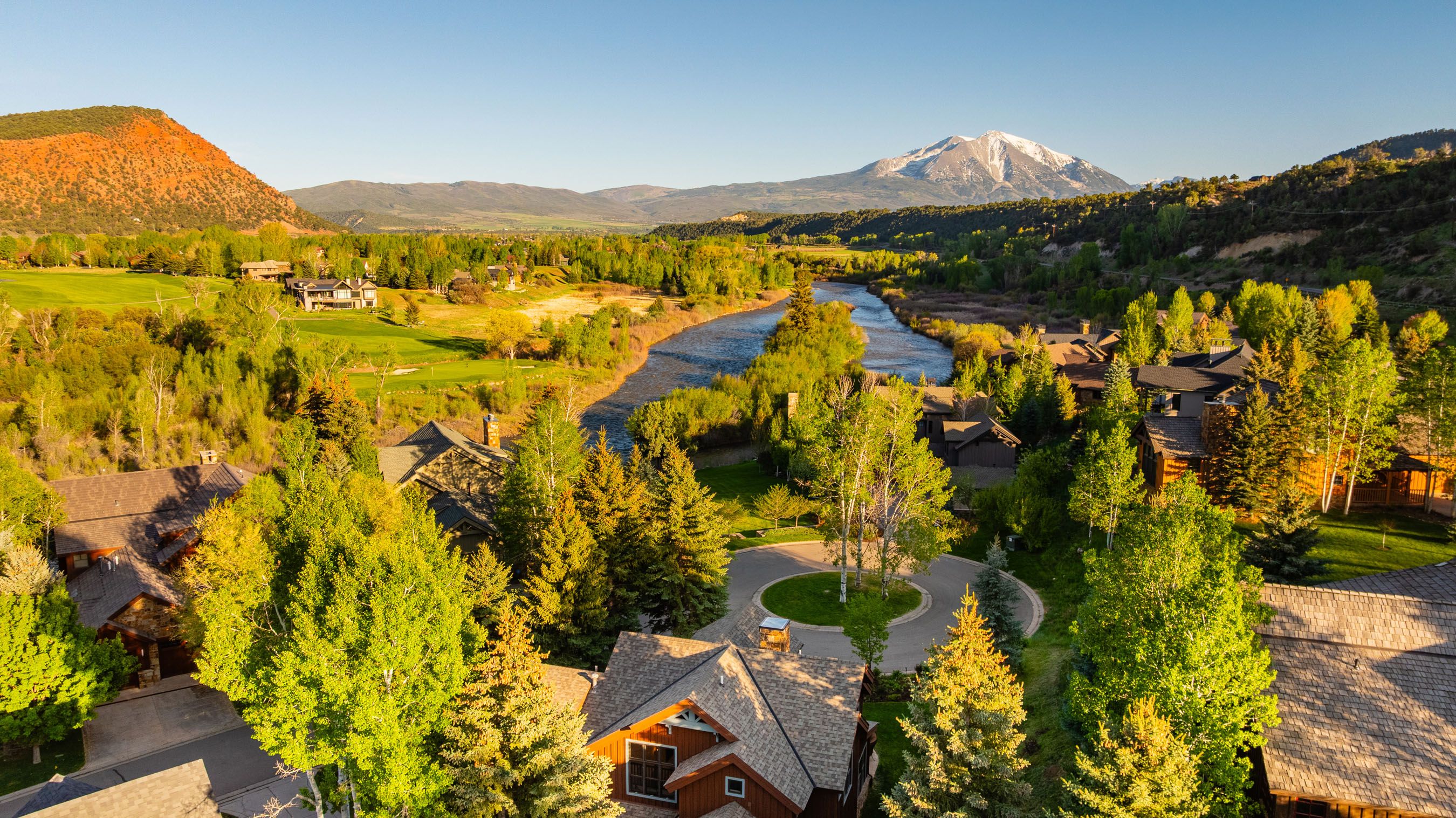
| The Roaring Fork Valley contains three distinct riverfront real estate markets: the Roaring Fork River, the Crystal River, and the Fryingpan River. Each runs through different terrain, attracts different buyers, and carries a different price profile. What they share is scarcity. Riverfront land in this corridor does not turn over on a schedule, and the total supply is fixed. |
Inventory along all three rivers is constrained by geography, regulation, and the simple fact that most owners who acquire riverfront land here do not sell it quickly. When properties do come to market, they tend to move.
Below: what distinguishes each river, where the current listings sit, and what buyers need to understand before they engage.
The Three Rivers: What Makes Each Market Different
The Roaring Fork River
The valley’s primary river. Runs 70 miles from Aspen to Glenwood Springs, where it joins the Colorado.
- Gold Medal fishery designation in upper sections, managed for exceptional trout populations
- Character shifts valley-wide: fast and cold above Basalt, broader and slower through Carbondale
- Frontage ranges from estate parcels above Basalt to smaller in-town lots near Carbondale
- Most of the corridor’s active listing inventory sits along this river
The Fryingpan River
Joins the Roaring Fork at Basalt. Short in length, outsized in reputation.
- Gold Medal designation along its full fishable length below Ruedi Reservoir
- Known among serious fly-fishermen as one of the most technically demanding tailwater fisheries in Colorado
- Regulated year-round, cold water release from Ruedi keeps conditions consistent regardless of season
- Frontage inventory is extremely limited: the canyon is narrow, development is constrained, and owners rarely sell
- No current listings on the Fryingpan. Properties here are acquired off-market or held for decades.
The Crystal River
Runs from Marble through Redstone to its confluence with the Roaring Fork at Carbondale. A different kind of river market.
- Narrower and steeper than the Roaring Fork, with a canyon character that limits development by topography
- Historic district designation at Redstone limits density, preserving long-term character and scarcity
- Agricultural heritage runs through most parcels: many carry water rights from historic irrigation use
- Attracts buyers seeking genuine remoteness over proximity to resort infrastructure
Where Riverfront Properties Are Located
Aspen and the Upper Roaring Fork
The valley’s tightest market. Large parcels with direct Roaring Fork frontage and Aspen pricing.
- Supply is severely constrained: estate-scale riverfront parcels in this corridor are rarely offered
- Buyer profile: long-term holders, privacy-focused, often acquiring as a generational asset
- Price tier: $15M+
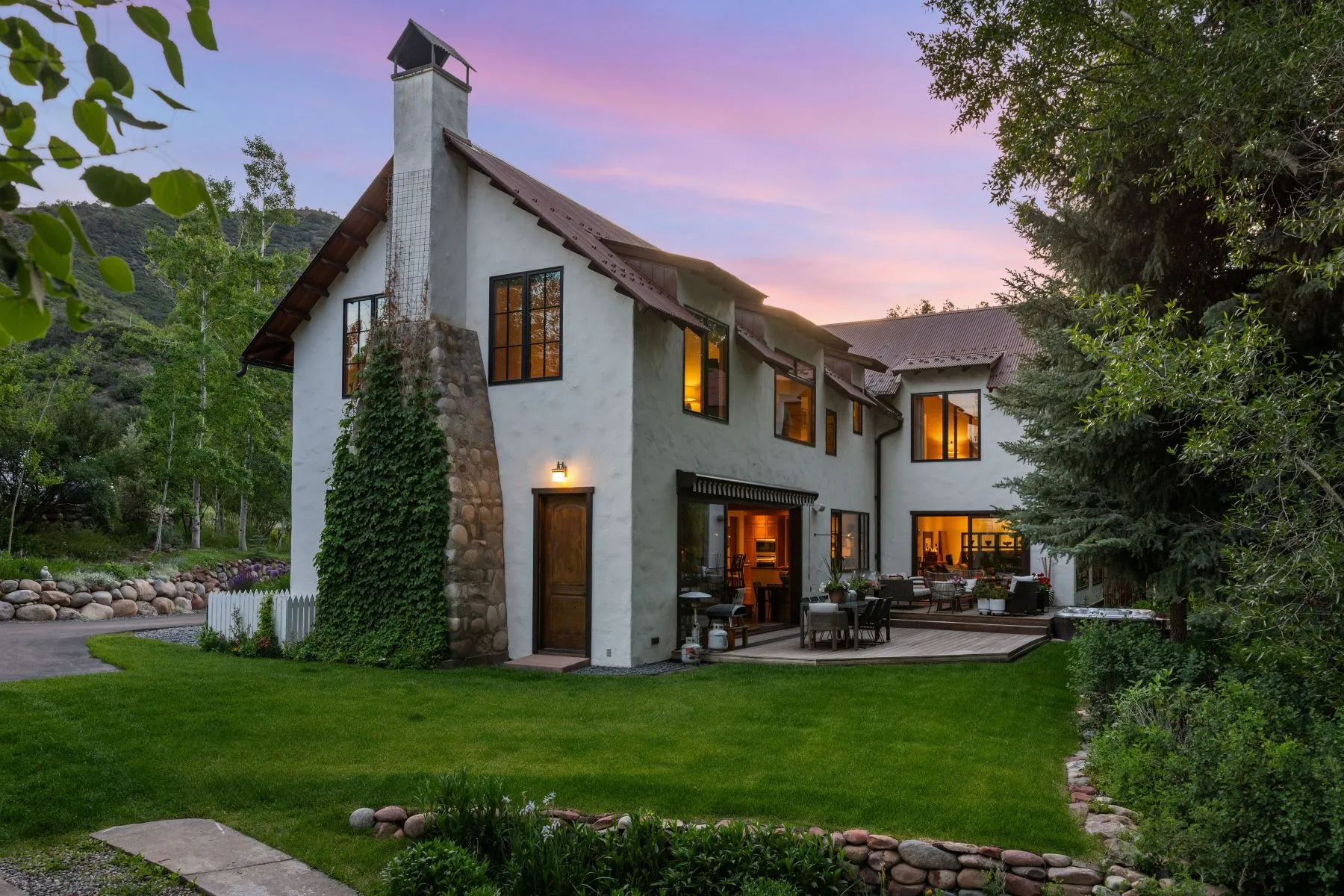
| 256 Twining Flats Road, Aspen | $17,950,000 |
| 5 bed · 7 bath · 8,111 sq ft · 7.0 acres · Built 2005 | |
| Seven acres of direct Roaring Fork frontage in the upper valley. This combination of acreage, privacy, and Gold Medal water access is among the rarest configurations in the Aspen market. View Listing → | |
Old Snowmass & Woody Creek: The Roaring Fork Corridor
Lower River Road runs along the Roaring Fork between Basalt and Carbondale through agricultural and equestrian terrain. The draw is land and water, not resort proximity.
- River has slowed and widened from its upper-valley pace, favoring larger parcels over dense siting
- Buyer profile: privacy-focused, often equestrian or agricultural interest
- Price tier: $10M+ for true riverfront
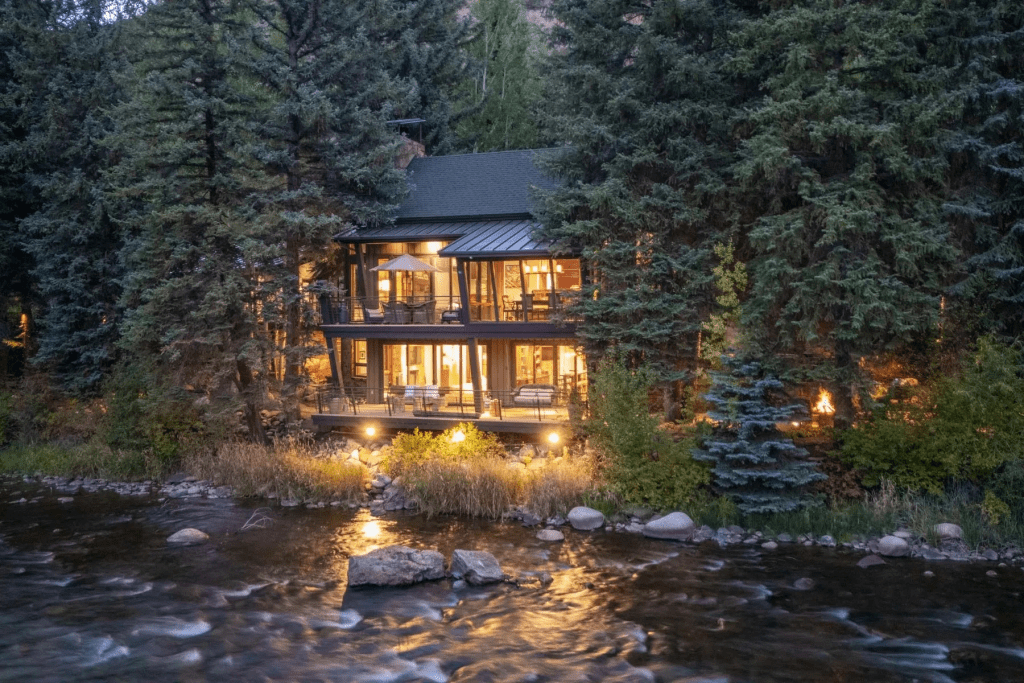
| 4076 Lower River Road, Snowmass | $10,995,000 |
| 3 bed · 3.5 bath · 3,298 sq ft · 0.50 acres · Built 2004 | |
| Direct Roaring Fork frontage on Lower River Road in a stretch of valley that has retained its agricultural character. Setting and water access carry more weight here than interior square footage. View Listing → | |
Basalt: The Fryingpan Confluence
The only place in the valley where a buyer can own land at the junction of two Gold Medal fisheries.
- Both the Roaring Fork and Fryingpan are accessible from Basalt properties
- Mid-valley price tier relative to upper valley, but Gold Medal access adds premium to riverfront parcels
- Growing dining and arts scene adds lifestyle context beyond the river
- Price tier: $3.5M to $7M for current riverfront inventory

| 1637 Emma Spur Road, Basalt | $6,900,000 |
| 5 bed · 5 bath · ~4,054 sq ft · 4.0 acres · Built 1991 · Wirkler subdivision | |
| Four acres with direct Roaring Fork frontage in the Emma area. A meaningful land holding at the mid-valley price tier, with strong access to both the Roaring Fork and Fryingpan fisheries. View Listing → | |
The Fryingpan River Corridor
Runs east of Basalt through a narrow canyon toward Ruedi Reservoir. One of the most coveted and least available riverfront addresses in the valley.
- Gold Medal designation along its full fishable length
- Year-round consistency from Ruedi’s cold water release makes it a destination fishery in any season
- Canyon topography limits buildable land; parcels with genuine frontage are extremely rare
- Properties here move off-market when they move at all

| 397 Oak Road, Basalt | $3,950,000 |
| 3 bed · 2.5 bath · 2,496 sq ft · 0.20 acres · Built 1990 | |
| Walkable to downtown Basalt with river access in the Peachblow neighborhood. The most accessible entry point in this roundup for direct riverfront ownership in the Basalt corridor. View Listing → | |
Carbondale: Two Rivers, the Valley’s Broadest Access
The only community where buyers can choose between the Roaring Fork and the Crystal River. Mount Sopris frames the southern horizon on nearly every view.
- Coryell Ranch community was designed around riverfront access as a primary feature, not an afterthought
- Most accessible price tier in the corridor for substantial riverfront acreage
- Buyer profile: value-oriented buyers who want land, water, and Sopris views without upper-valley pricing
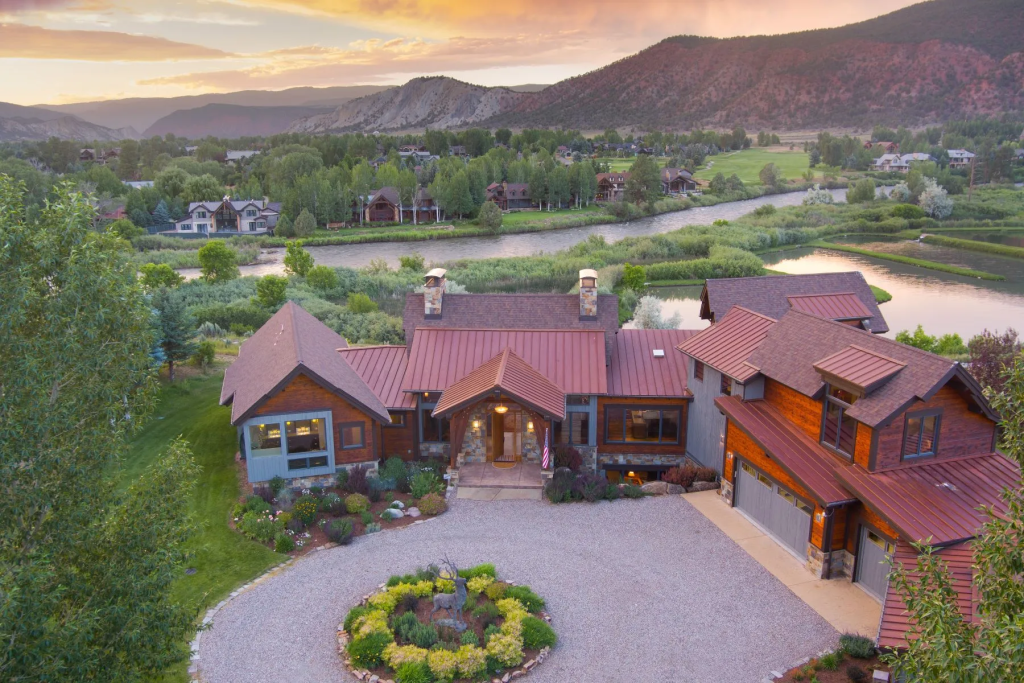
| 137 Stonefly Drive, Carbondale | $8,750,000 |
| 5 bed · 5 full + 2 half bath · 5,807 sq ft · 2.03 acres · Built 2008 · Coryell Ranch | |
| One of the most substantial riverfront residences in Carbondale. Two acres within Coryell Ranch with direct Roaring Fork access and strong square footage for the price tier. View Listing → | |
Redstone and the Crystal River
A historic district town on the Crystal River. Limited inventory, distinct character, and a buyer profile that prioritizes solitude over access.
- Historic designation limits development density, supporting long-term scarcity
- Older stock dominates; renovated properties are uncommon and command a premium
- Price tier: $1.5M to $2.5M for current riverfront inventory
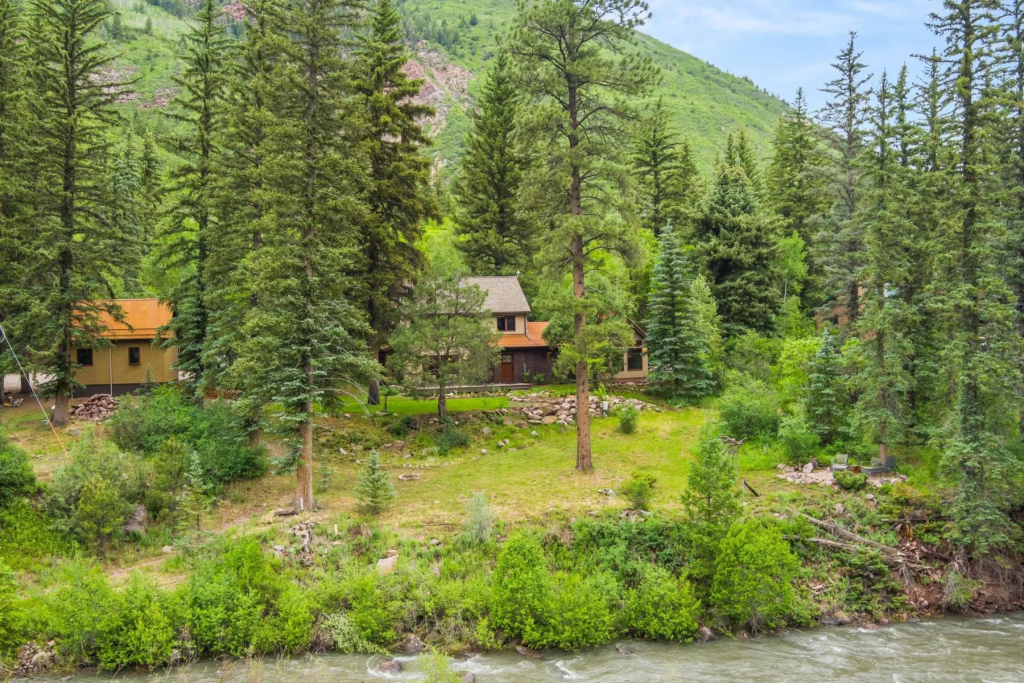
| 135 Irwin Drive, Redstone | $1,695,000 |
| 3 bed · 3.5 bath · 2,345 sq ft · 1.0 acre · Built 1982 · Renovated 2023 | |
| Crystal River frontage in Redstone’s historic district, substantially renovated in 2023. Removes the renovation burden that is the primary friction point in this market. View Listing → | |
What Riverfront Ownership Actually Includes
Riverfront property in Colorado is a distinct asset class. Key characteristics:
- Gold Medal water access: Both the Roaring Fork (upper sections) and the Fryingpan carry this designation. It reflects state-managed fishery quality, not just scenery.
- Privacy buffer: River corridors cannot be built into. A property fronting the river has a natural, permanent setback on at least one boundary that no development can eliminate.
- Water rights: In Colorado, water rights are separate from surface ownership and separately titled. They can include irrigation rights, domestic use rights, or storage rights. What conveys with a given property varies and must be reviewed independently.
- Agricultural heritage: Many parcels along the Crystal and mid-Roaring Fork carry water shares from historic irrigation use. These have independent value and add complexity to transactions.
- Buildability constraints: FEMA floodplain designations, county riparian setbacks (Pitkin, Garfield, Eagle counties), and state regulations all govern what can be placed near the water. Understanding these before making an offer is essential.
| “For generations, people have been drawn to life along the water, and in Colorado, few amenities rival the privilege of true riverfrontage. There’s a natural rhythm and sense of calm that comes from living beside a flowing river—an experience that simply can’t be replicated.”– Chris Striefel, Broker |
What to Know Before You Buy
- Prior appropriation: Colorado’s water law doctrine means the water running past a property may be owned separately. First in time, first in right. Verify what water rights convey with the parcel before closing.
- Floodplain designations: FEMA Zone A and Zone AE properties require flood insurance with federally backed financing. Review the Flood Insurance Rate Map for any riverfront parcel before committing.
- Seasonal access: Crystal River parcels north of Redstone can face road conditions during heavy snowfall or runoff. Evaluate year-round access carefully.
- County vs. municipal zoning: Most riverfront parcels here are in unincorporated county land (Pitkin, Garfield), not municipal jurisdictions. This affects ADU rights, short-term rental regulations, and future development options.
- Off-market inventory: Fryingpan River frontage and some upper Roaring Fork parcels rarely appear on the public market. An Aspen Snowmass Sotheby’s International Realty broker with long-standing valley relationships is the most reliable path to these properties.
Frequently Asked Questions
What makes Colorado riverfront real estate different from other states?
Colorado’s prior appropriation doctrine separates water rights from surface ownership. Unlike most states, riparian rights do not attach automatically to land. Buyers must independently evaluate what water rights, if any, convey with a given property. That legal structure makes due diligence more specific here than in most markets.
How do water rights work with riverfront property in Colorado?
Water rights are decreed by state water court, ranked by priority date, and titled separately from land. Older rights have first access; junior rights are curtailed in dry years. Review the water rights schedule in the title and understand what each right permits (irrigation, domestic use, storage) before closing.
What is the Fryingpan River known for?
The Fryingpan is one of Colorado’s most respected tailwater fisheries, with a Gold Medal designation along its full fishable length below Ruedi Reservoir. Cold, consistent water release makes it a year-round destination. Riverfront inventory here is extremely limited and typically transacts off-market.
Are there riverfront homes for sale along the Roaring Fork River?
Yes. Aspen Snowmass Sotheby’s currently represents direct-frontage properties in Aspen, the Emma area near Basalt, the Old Snowmass corridor, and Carbondale’s Coryell Ranch community. Inventory is limited and properties at this siting tend to move without extended time on market.
What is the Crystal River known for in real estate?
The Crystal River corridor, from Marble through Redstone to Carbondale, is known for its remoteness, historic district character at Redstone, and small-scale inventory. It attracts buyers who want genuine solitude and a rural setting. Properties here rarely appear on the open market.
Which community has the most riverfront inventory in the Roaring Fork Valley?
Carbondale typically carries the most active inventory, given its location at the confluence of two rivers and its more accessible price tier. Basalt is a close second, with the added draw of Fryingpan access. Aspen’s upper-valley riverfront market is the most limited and most expensive.
Leave a Reply